

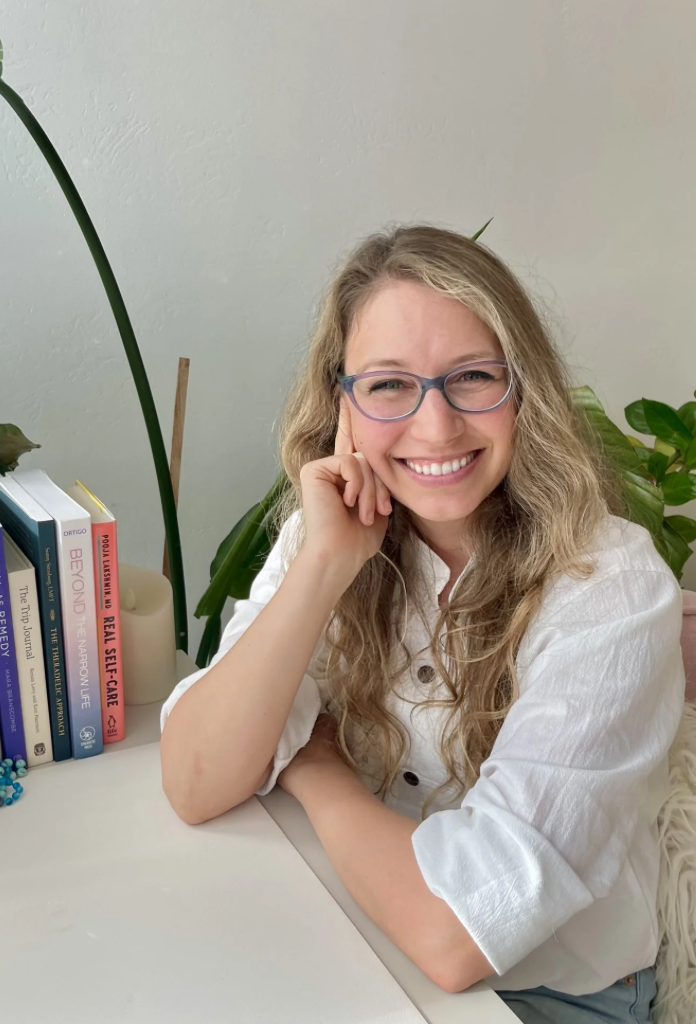
Hi, I'm Jill.
My path into psychiatry wasn't driven simply by a fascination with mental health. It began with a lifelong curosity about what shapes us, what helps us heal, and what it truly means to live a meaningful, authentic life. That curosity continues to guide my work everyday.
Over the course of my career, I've had the privilege of caring for individuals across a wide range of psychiatric settings including emergency and crisis psychiatry, community mental health, early psychosis treatment, and outpatient care. I’ve sat with people through some of the most difficult moments of their lives—navigating psychosis, suicidality, trauma, poverty, grief, and the kinds of suffering that don't always fit neatly into a diagnostic code. Those experiences reinforced something I continue to believe today: while diagnoses can provide important clarity and guide treatment, they rarely tell the whole story.
There have been seasons in my own life that challenged my identity, required me to begin again, and taught me that healing is rarely linear. I’ve asked myself questions like: Who am I outside of the roles I’ve played? What happens when the life I’ve built no longer feels like mine? How do I find my way back to myself? For me, answering those questions has sometimes meant making the difficult choice to leave behind a life I once thought I’d have forever, and finding the courage to begin again in a way that felt more aligned with who I was becoming.
Those experiences didn't make me an expert in someone else's story, but they taught me how deeply identity can become intertwined in our relationships, roles, accomplishments, and way of surviving and how meaningful it can be to have support as we find our way back to ourselves.
Together, those experiences led me to ask the same question again and again:
What if we became just as curious about the person as we are about the diagnosis?
That question became the foundation of Soulfloria.
Today, I bring together evidence-based psychiatry with a deeply relational, and collaborative approach to care. Whether medication becomes part of your treatment or not, my goal is to understand not only what you're experiencing, but who you are—your relationships, your life experiences, your strengths, your values, and every dimension that makes your story uniquely yours.
I don't believe healing means becoming someone different. I believe it's about reconnecting with the parts of yourself that may have been hidden beneath survival, pain, or life's challenges. Our work together helps you move beyond surviving and toward a life that feels more grounded, connected, and authentically your own.
Jill Chaudhuri, PMHNP-BC
Founder of Soulfloria Psychiatry
UCSF-trained, Board-certified Psychiatric Nurse Practitioner
-
Bachelor of Science in Psychology, California Coast University, Summa Cum Laude
Master of Science in Nursing, Elmhurst University
Post-Master’s Certificate in Psychiatric Nurse Practitioner, University of California San Francisco (UCSF)
-
Board Certified Psychiatric Mental Health Nurse Practitioner (PMHNP—BC) —American Nurses Credentialing Center (ANCC)
Graduate-Level Clinical Training in Psychodynamic Psychotherapy & Psychiatry — Access Institute for Psychological Services
Sigma Theta Tau International Honor Society of Nursing
Beyond formal education, I continue to deepen my training through continuing education, consultation, and advanced study in psychotherapy, psychiatry, and trauma-informed care. I strive to provide care that is both grounded in current evidence and shaped by a commitment to lifelong learning in service of my clients.
-
Healing has also taught me the importance of making space for the people, places, and moments that help us feel most like ourselves.
When I'm not working, you'll usually find me hiking with my dog, Atlas, traveling, exploring Northern California, or dancing. These moments remind me that mental health isn't only about reducing suffering. It's also about cultivating joy, connection, curiosity, and a life that feels meaningful.
I look forward to meeting you!
Patricia Pop, MD
Collaborating Psychiatrist
Soulfloria Psychiatry is supported through a collaborative relationship with Patricia Pop, MD, a Stanford-trained, board-certified psychiatrist who serves as the collaborating psychiatrist under California standardized procedures.
I chose to collaborate with Dr. Pop because her holistic approach to psychiatry closely aligns with the philosophy of Soulfloria.
Dr. Pop earned her medical degree from Columbia College of Physicians & Surgeons and completed her psychiatry residency at Stanford University, followed by a psychodynamic fellowship through the San Francisco Center for Psychoanalysis. She has worked across inpatient, outpatient, and specialty clinical settings.
While I provide all direct client care at Soulfloria Psychiatry, Dr. Pop serves as my collaborating psychiatrist, offering consultation and clinical support to help ensure high-quality care.